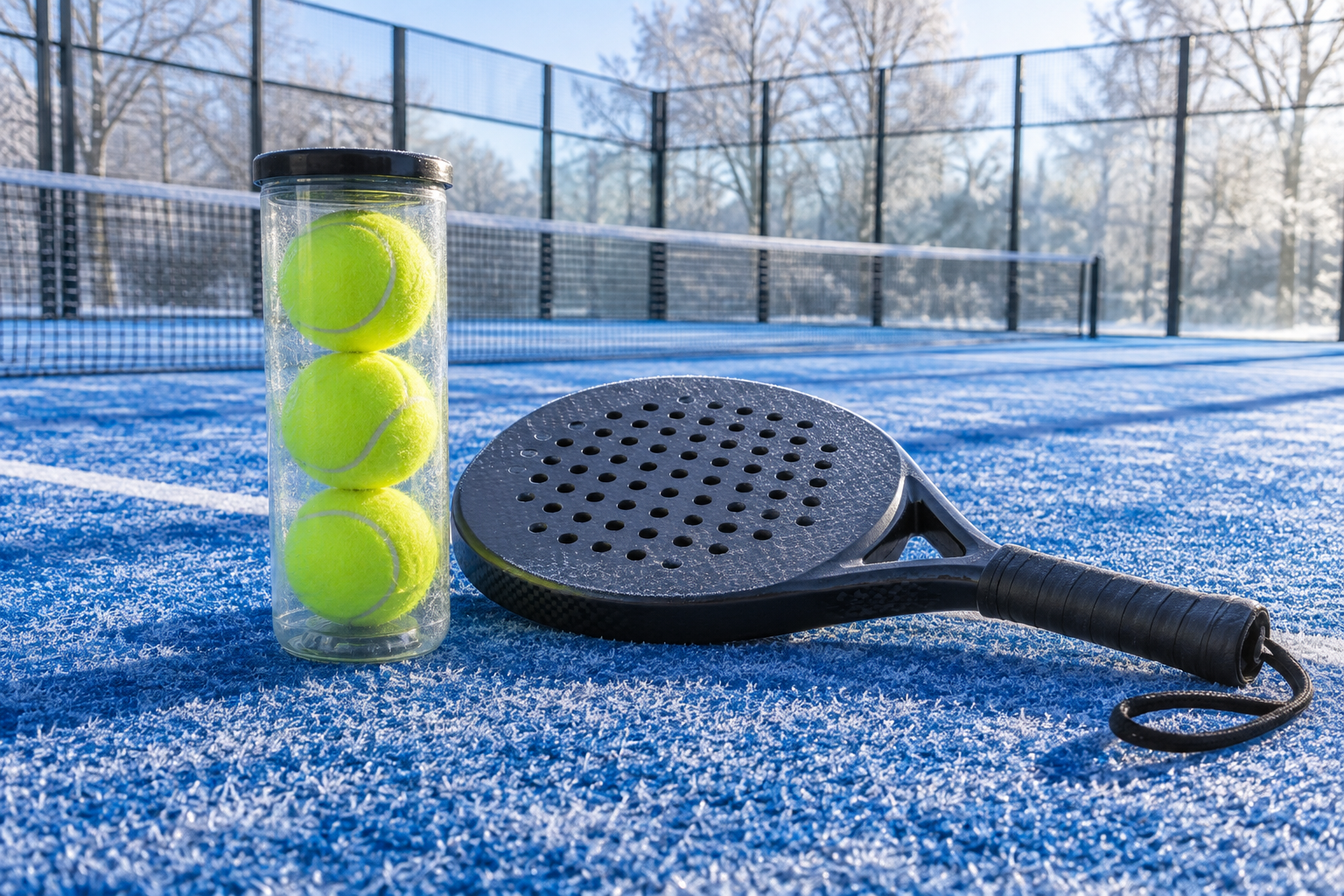
The best padel balls for cold weather are faster, livelier balls that make up for the way low temperatures slow the game down. In winter, standard balls can feel heavy and dead, so choosing a quicker ball makes outdoor padel far more enjoyable.
In this article
Why cold weather slows padel balls down
Padel balls are pressurised. When the air is cold, the gas inside the ball contracts and the rubber stiffens, so the ball bounces lower and comes off the racket more slowly. Damp courts add to the effect. That is why many players notice longer, slower rallies and a heavier feel on winter evenings.
A faster ball, a fresh tube and keeping balls warm before play all help. Check the Met Office forecast before outdoor sessions so you know what to expect.


1. Wilson Premier Padel Speed: best overall
Wilson describes this ball as built for speed and ideal for slower courts, low altitudes and cold-weather conditions, where standard balls can feel heavy. Its Dura-Weave felt is wrapped tightly around the core to help it move faster. It is also the official Premier Padel ball, so it is a strong choice for winter matches.
01
Built for slow, cold conditions
Built for slow, cold conditions.
2. Bullpadel Premium Pro: best value multipack
Bullpadel sells the Premium Pro as a high-speed ball with high-quality synthetic felt and a high-density rubber core. The three-tube pack means you can open a fresh tube for each winter session, which matters when cold weather drains pressure quickly.
High-speed balls in a 9-ball pack
High-speed balls in a 9-ball pack.
3. Dunlop Pro Padel: best fip-certified ball
Dunlop’s Pro Padel ball is certified by the International Padel Federation and designed for consistent bounce and faster, high-tempo rallies. Its bright yellow felt is easy to track in the low light of winter evenings.
Consistent bounce for match play
Consistent bounce for match play.

How to choose the best padel balls for cold weather
- Pick a speed ball: balls marketed as fast or high-speed bounce more readily in the cold.
- Open a fresh tube: pressure drops over time, and older balls feel even deader in winter.
- Keep them warm: store balls indoors and bring them out just before you play.
- Consider certification: balls approved by the International Padel Federation give consistent performance for matches.
Making any padel ball last longer in winter
Store balls at room temperature, never in a cold car or garage. Use a fresh tube for each session if you can, and keep older balls for practice. A ball pressuriser can also help balls keep their pressure between sessions; see why padel balls go flat so fast.
How we chose
We have not tested these balls on court. We shortlisted them from their Amazon UK listings, prioritising balls described as fast, lively or designed for slow and cold conditions.
Storing padel balls for cold weather
Keep your padel balls for cold weather indoors before you play, and only take them to the court when you are ready. Warm balls bounce better, so padel balls for cold weather work best when they start at room temperature.
Frequently asked questions
Why do padel balls bounce less in winter?
Cold air lowers the pressure inside the ball and stiffens the rubber, so it bounces lower and slower.
Should I use fast balls in winter?
Yes. A ball designed for speed makes up for the slower conditions on cold outdoor courts.
How should I store padel balls in winter?
Indoors at room temperature, not in a cold car or garage.
The bottom line
The Wilson Premier Padel Speed is the best padel ball for cold weather, thanks to its design for slow and chilly conditions. The Bullpadel Premium Pro multipack is great value, and the Dunlop Pro Padel is a reliable certified choice.
Keep reading: Winter padel: balls, layers and outdoor courts · Best padel balls