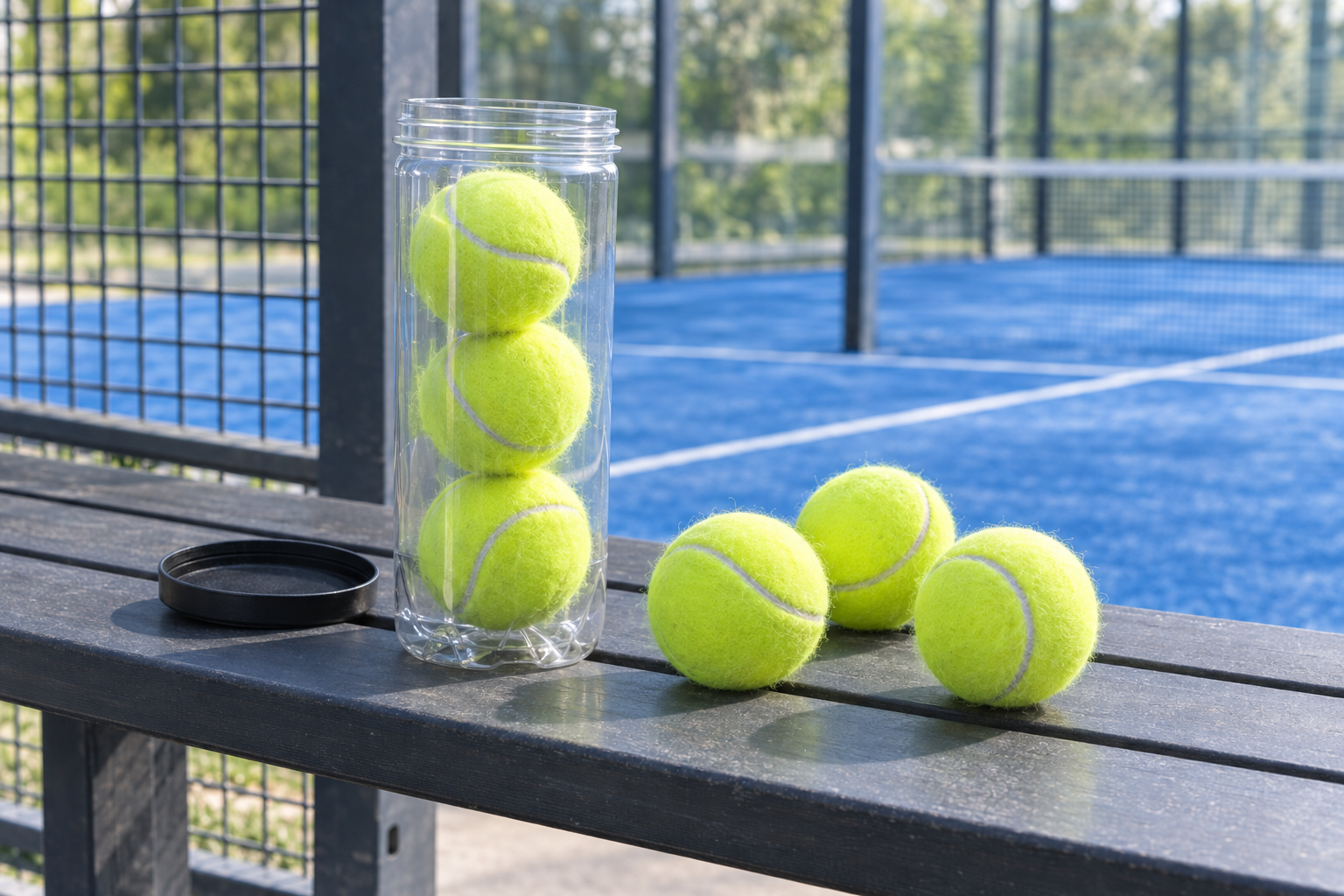
Padel balls go flat faster than many players expect, sometimes within a few sessions. That is because they are pressurised, and the gas inside slowly escapes through the rubber as soon as the tube is opened. Understanding why helps you get more from every tube.
In this article
Why padel balls go flat
Padel balls have a hollow rubber core filled with pressurised gas. Sealed tubes keep that pressure in. Once opened, the gas gradually escapes through the rubber, so the ball bounces lower and feels heavier. Heavy hitting, wet felt and cold weather speed up the effect.
What makes padel balls go flat faster?
- Time since opening: pressure starts dropping as soon as the seal is broken.
- Temperature: cold makes balls feel deader; heat can accelerate pressure loss.
- Hard hitting: repeated impacts compress the core.
- Damp conditions: wet felt makes balls heavier and slower.
- Felt wear: fluffed-up or bald felt changes how the ball plays.
6 ways to stop padel balls going flat so fast
1. Open a fresh tube for matches
Keep older balls for practice and drills.
2. Store balls at room temperature
Avoid cold cars, garages and hot sheds. See how to store padel balls.
3. Use a ball pressuriser
A pressuriser keeps balls under pressure between sessions; read are padel ball pressurisers worth it?
4. Keep balls dry
Avoid playing with soaked balls and let damp balls dry naturally.
5. Rotate balls
Use several balls in a session rather than hammering the same one.
6. Choose durable balls
Some balls are designed to last longer for training; see the best padel balls.
How to tell when padel balls have gone flat
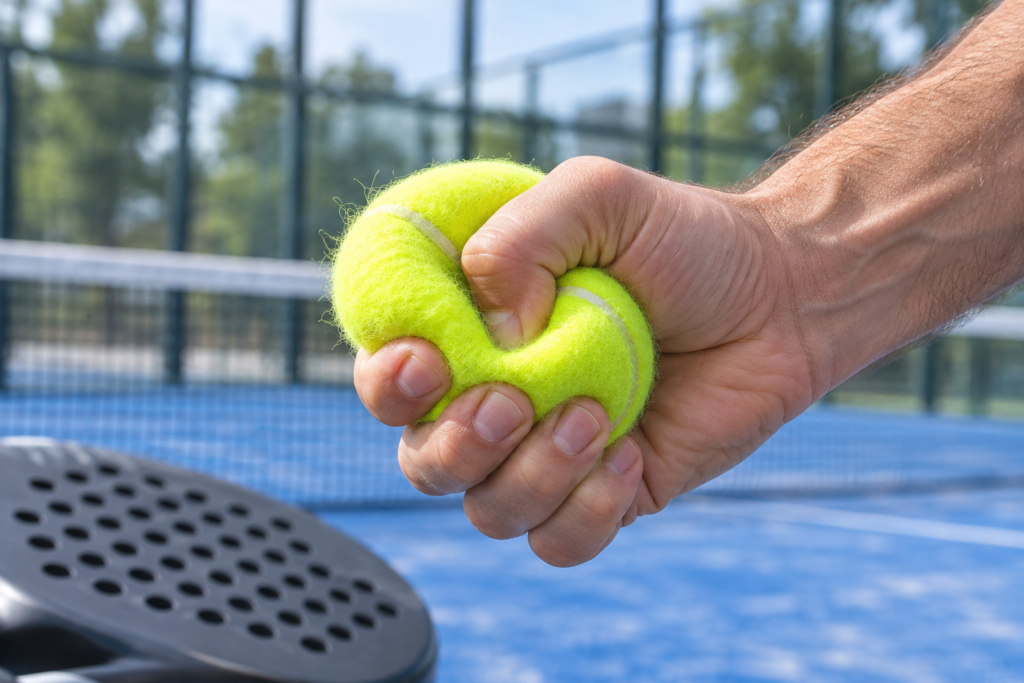
Drop a ball from head height next to a fresh one. If it bounces noticeably lower, or feels soft when squeezed, it has lost pressure. Flat balls slow the game down and can put extra strain on your arm, because you swing harder to get the same depth. Read how long padel balls last for more.
Key takeaways
- Open a fresh tube for matches: Keep older balls for practice and drills.
- Store balls at room temperature: Avoid cold cars, garages and hot sheds.
- Use a ball pressuriser: A pressuriser keeps balls under pressure between sessions; read are padel ball pressurisers worth it?
- Keep balls dry: Avoid playing with soaked balls and let damp balls dry naturally.
- Rotate balls: Use several balls in a session rather than hammering the same one.
- Choose durable balls: Some balls are designed to last longer for training; see the best padel balls.
How to slow down how fast padel balls go flat
Keep tubes sealed until you need them, store them at room temperature and consider a ball pressuriser. These habits slow how quickly padel balls go flat.
New to the sport or looking for a club? LTA Padel, the national governing body for padel in Great Britain, has information on the game, venues and competitions.
Frequently asked questions
How quickly do padel balls lose pressure?
They start losing pressure as soon as the tube is opened; many players notice a difference after a few sessions.
Can you re-pressurise padel balls?
A pressuriser can help slow pressure loss, but it will not fully restore very old balls.
Are flat balls bad for your arm?
They can make you swing harder, which may add strain.
The bottom line
Padel balls go flat because pressurised gas escapes once the tube is opened. Store them well, use fresh balls for matches and consider a pressuriser.
Keep reading: How to store padel balls · Best padel balls