
Padel vs tennis racket is a common question for tennis players trying padel. The padel vs tennis racket question comes up a lot among new players, especially those coming from tennis. The two look very different, and they play very differently too. Here are the six key differences and what they mean on court.
In this article
6 key differences: padel vs tennis racket
1. No strings
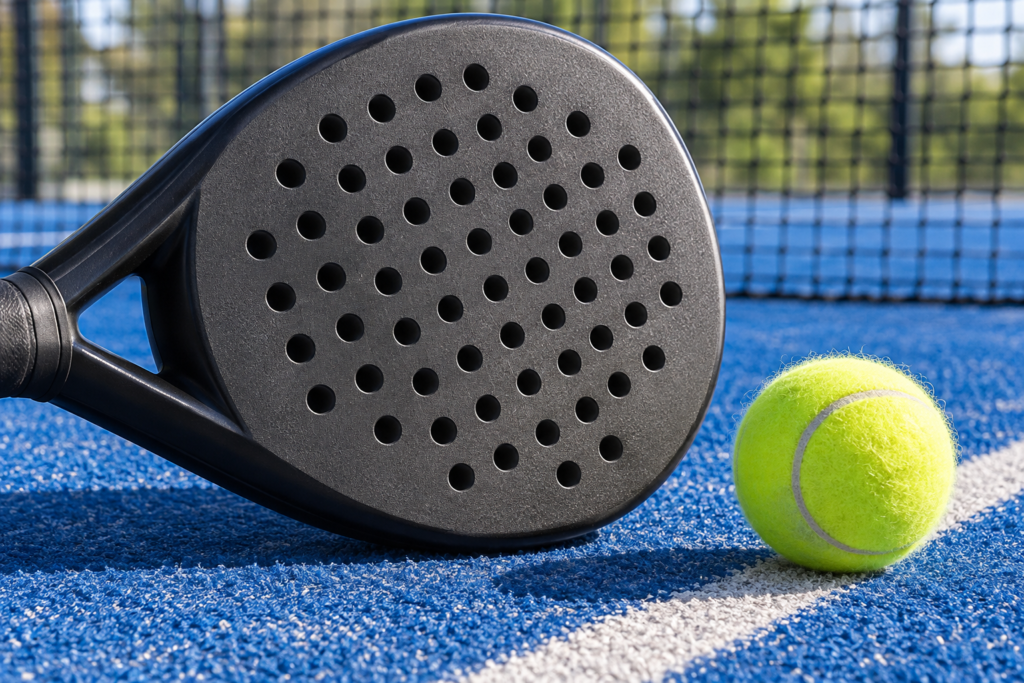
A padel racket has a solid, perforated face instead of strings. The face is usually fibreglass or carbon over a foam or EVA rubber core.
2. Shorter and more compact
Padel rackets are much shorter than tennis rackets. Most adult models are around 45.5 cm long and 38 mm thick, within the limits set by the International Padel Federation.
3. Holes in the face
The holes reduce air resistance and weight, and help with ball control and spin.
4. A wrist strap
Padel rackets have a safety cord that you wear around your wrist, because the game is played close together inside a glass box.
5. Different weight and feel
Padel rackets are typically heavier for their size than tennis rackets, but the shorter length makes them feel compact and manoeuvrable.
6. A different swing
Padel uses shorter, more compact swings, mostly below waist height except for overheads. Big, looping tennis swings tend to send the ball long or into the glass.
Can you use a tennis racket for padel?
No. Tennis rackets are too long for the padel court, and padel rules require a solid, perforated racket. Padel balls are also slightly different from tennis balls; see padel balls vs tennis balls.
Tips for tennis players switching to padel
- Shorten your backswing, especially on volleys.
- Let the ball come off the glass rather than rushing it.
- Use the underhand serve required in padel.
- Choose a forgiving racket while you adapt; see the best padel rackets for beginners.
Choosing your first padel racket
Tennis players often pick powerful rackets, but a round or teardrop racket with a soft core makes the transition easier. Read how to choose a padel racket and padel racket shapes explained for guidance.
Key takeaways
- No strings: A padel racket has a solid, perforated face instead of strings.
- Shorter and more compact: Padel rackets are much shorter than tennis rackets.
- Holes in the face: The holes reduce air resistance and weight, and help with ball control and spin.
- A wrist strap: Padel rackets have a safety cord that you wear around your wrist, because the game is played close together inside a glass box.
- Different weight and feel: Padel rackets are typically heavier for their size than tennis rackets, but the shorter length makes them feel compact and manoeuvrable.
- A different swing: Padel uses shorter, more compact swings, mostly below waist height except for overheads.
Padel vs tennis racket: which should you buy?
If you are comparing a padel vs tennis racket because you play both sports, you need one of each: a tennis racket is not allowed in padel and would be awkward on a small court with walls. When weighing up padel vs tennis racket costs, remember a forgiving beginner padel racket costs less than many tennis frames, and there are no strings to replace.
Frequently asked questions
Can I use a tennis racket to play padel?
No. Padel requires a solid, perforated racket, and tennis rackets are too long.
Are padel rackets heavier than tennis rackets?
They are heavier for their size but feel compact because they are much shorter.
Is padel easier than tennis?
Many people find padel easier to pick up because the court is smaller and the racket is easier to control.
The bottom line
Padel rackets are shorter, stringless and designed for compact swings. Tennis players should shorten their swing and start with a forgiving padel racket.
Keep reading: How to choose a padel racket · Padel rules for beginners