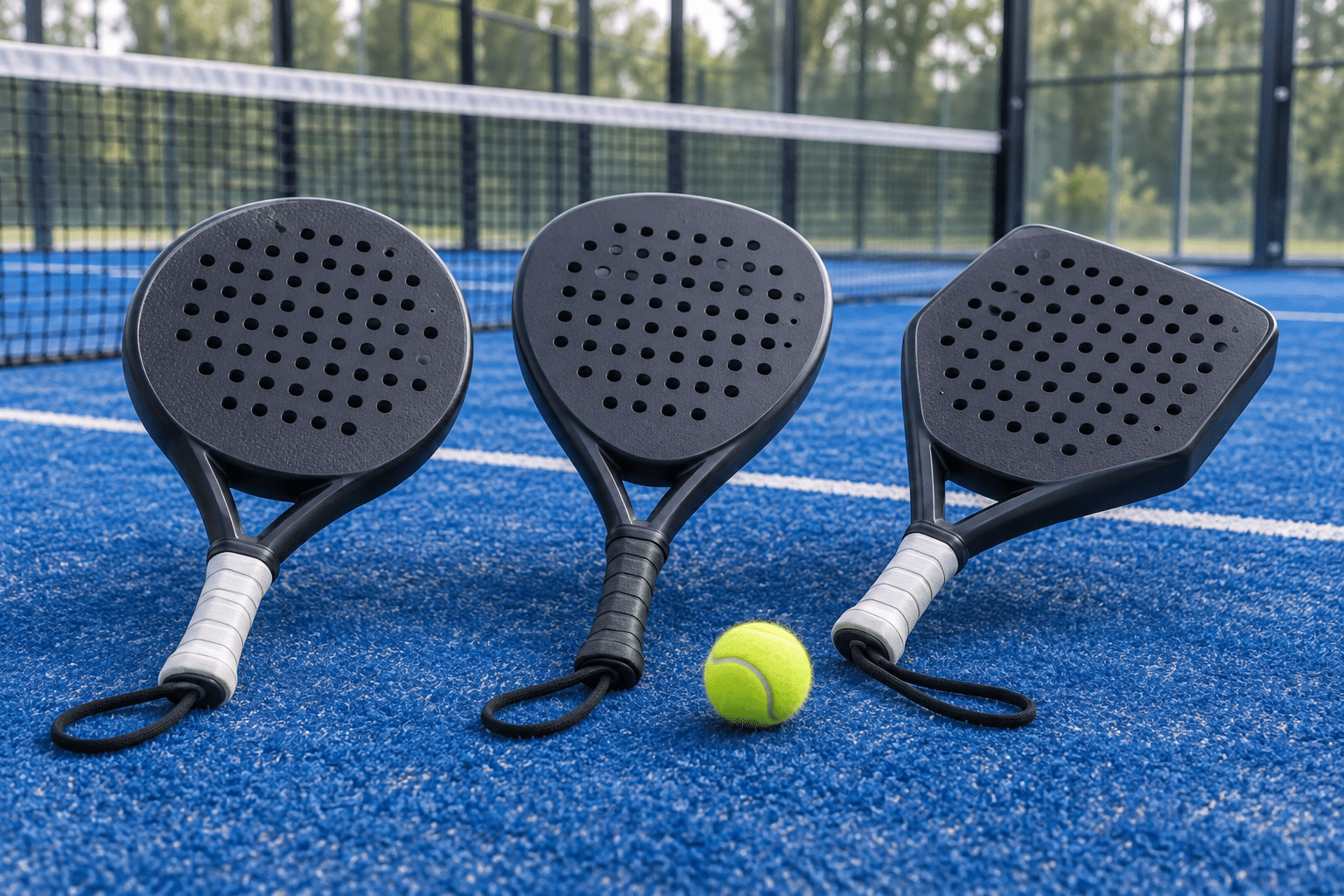
Padel racket shapes decide where the sweet spot sits and where the weight goes. That is why it’s the first thing to check when you buy.
In this article
| Shape | Sweet spot | Balance | Suits |
|---|---|---|---|
| Round | Low, large | Low | Beginners, control players |
| Teardrop | Middle | Even | Intermediate all-rounders |
| Diamond | High, small | High | Advanced attacking players |
Round rackets
The sweet spot sits low and central, and the balance sits towards the handle. Maximum control and forgiveness. Best for beginners and defensive players who win points with placement.
Teardrop rackets
A middle ground: a slightly higher sweet spot and a more even balance. Suits intermediate players who want extra punch without losing control.
Diamond rackets
Weight high in the head and a smaller, higher sweet spot. Generates the most power on smashes and is the least forgiving. Best for advanced attacking players with good technique.
Hybrid shapes
Many brands now sell rackets that sit between two shapes. Check the balance figure as well as the name.
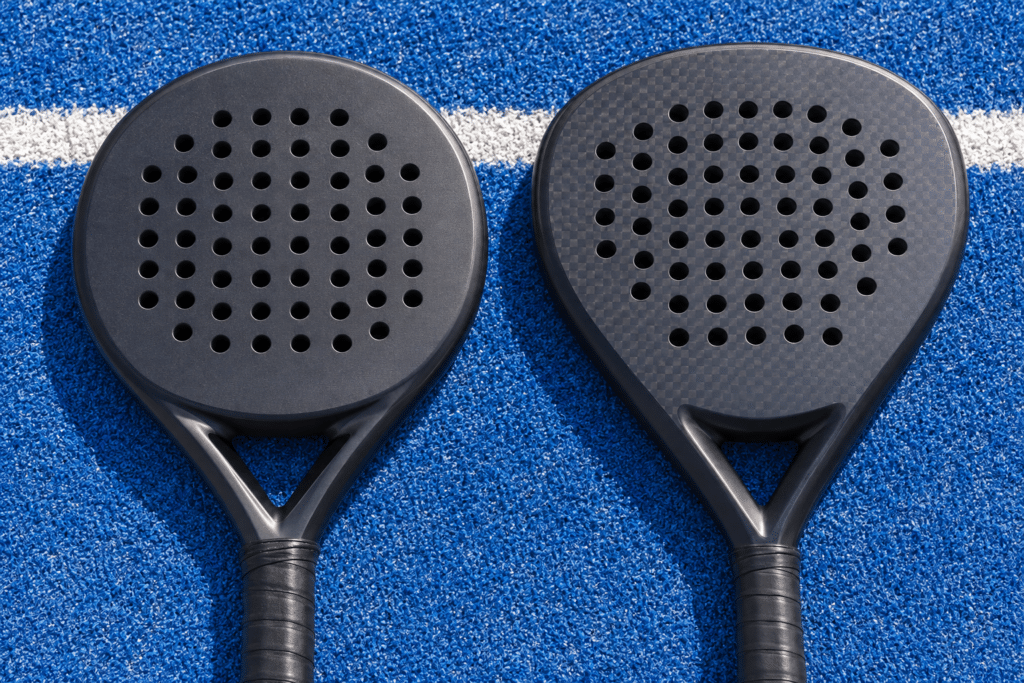
Which of the padel racket shapes is right for you?
Start with your level. Beginners almost always progress faster with a round racket, because the large, central sweet spot forgives mishits. Intermediate players who want more pace can move to a teardrop. Diamond rackets suit advanced players with consistent technique who win points with smashes and fast volleys.
- Round: beginners, defensive players and anyone who values control.
- Teardrop: improving players who want a balance of power and control.
- Diamond: advanced, attacking players.
Padel racket shapes and your elbow
Shape affects comfort as well as performance. Head-heavy diamond rackets put more strain on the forearm, especially on mishits. If you have elbow or shoulder trouble, a round, low-balanced racket with a soft core is usually the most comfortable choice. Read padel and tennis elbow: gear that helps for more advice.
Myths about padel racket shapes
A common myth is that a diamond racket will automatically give you a bigger smash. In reality, power comes from technique first; a diamond racket only adds power if you hit the smaller sweet spot consistently. Another myth is that round rackets are only for beginners. Many experienced players use round rackets because they value control and consistency.
Do shapes vary between brands?
Yes, a little. Each brand interprets round, teardrop and diamond slightly differently, and many now sell hybrid shapes in between. Always check the balance and weight as well as the shape name. Competition rules on racket size are set by the International Padel Federation, so the differences between brands are about feel rather than dimensions.
How padel racket shapes affect the sweet spot
The sweet spot is the area of the face that gives the cleanest, most powerful contact. On a round racket it sits low and in the centre, close to where most beginners naturally make contact. On a teardrop it moves slightly higher, and on a diamond it sits high and is smaller. The higher the sweet spot, the more power you can generate on overheads, but the more precise your timing needs to be.
Choosing a new shape when you upgrade
When you upgrade, change one thing at a time. Moving from a round racket to a teardrop with a similar weight and core is a gentle step. Jumping straight from a soft round racket to a stiff diamond is a big change that can hurt your consistency and your arm. Our guide to choosing a padel racket explains how balance and core change the feel.
Not sure where you fit? Use the racket finder or read how to choose a padel racket.