
Padel knee pain usually comes from the lunges, twists and sudden stops that make the game so dynamic. The knee absorbs a lot of force when you change direction quickly, especially on grippy artificial turf. Most players can lower their risk with the right shoes, a warm-up and some simple strength work.
In this article
What causes padel knee pain?
- Sudden stops and twists: planting your foot and turning loads the knee joint and ligaments.
- Deep lunges: reaching low balls puts pressure on the front of the knee.
- Too much, too soon: jumping from one game a week to several often leads to overload.
- Worn or wrong shoes: shoes that grip too much or too little change how forces reach the knee.
- Weak supporting muscles: the thighs and hips help control the knee during quick movements.
7 ways to prevent padel knee pain
- Warm up properly with our 10-minute padel warm-up.
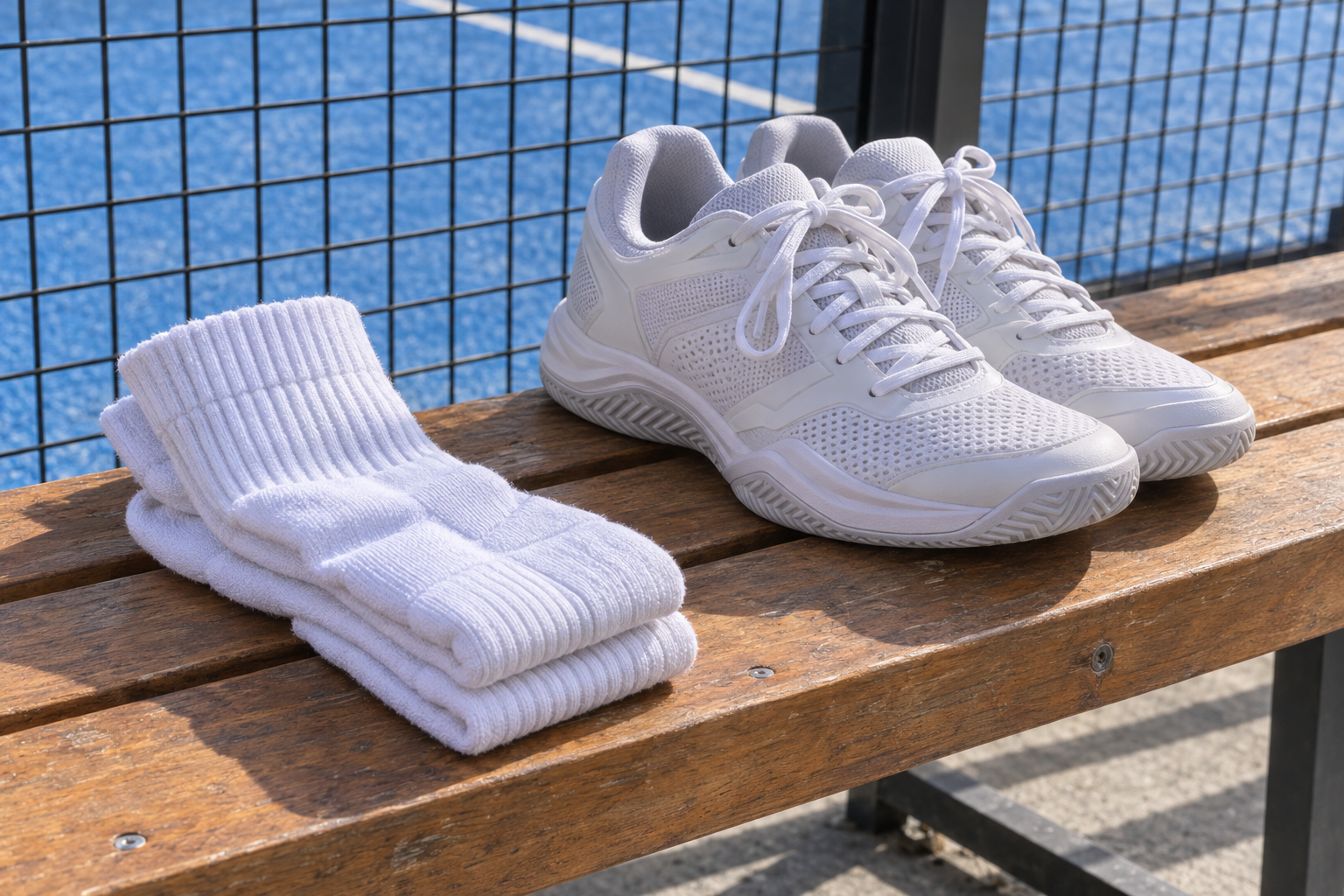
- Use shoes with the right sole for your court; read herringbone vs omni soles.
- Replace shoes when the tread wears smooth.
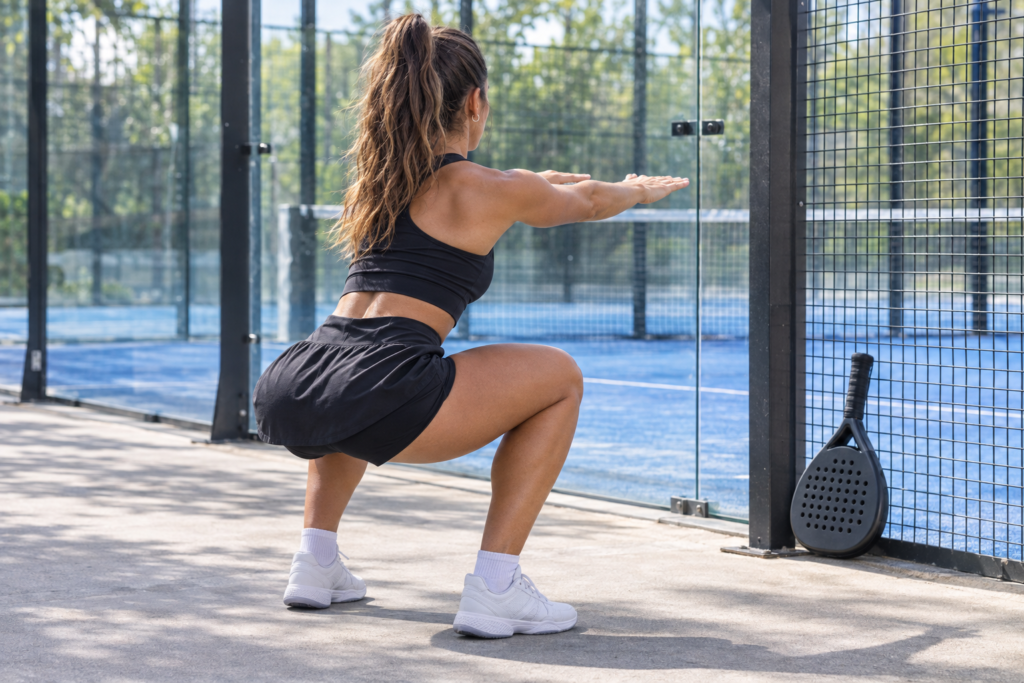
- Strengthen your legs and hips with padel fitness exercises.
- Build up playing time gradually.
- Bend your knees and move your feet rather than lunging and reaching.
- Rest between hard sessions so your body can recover.
Do knee supports help with padel knee pain?
Some players find a compression sleeve or a patella strap makes their knee feel more stable and comfortable during play. A support is not a treatment for an injury, but it can help you feel more confident. See our best knee supports for padel for sleeves and straps on Amazon UK.
Footwork habits that protect your knees
Small, quick steps let you reach the ball without big lunges. Use a split step as your opponent hits, so you are ready to move in any direction. Turn your whole body rather than twisting on a planted foot, and let the ball come to you off the glass instead of chasing every ball at full stretch.
When to see a professional
See a GP or physiotherapist if your knee is swollen, locks, gives way, or hurts for more than a couple of weeks. The NHS guide to knee pain explains common causes and when to get urgent help.
Padel knee pain and court surfaces
Artificial turf with plenty of sand gives some slide, while newer or worn turf can grip more and load the knee during quick turns. Pay attention to how each court feels and adjust your footwork. Shoes matter here too: herringbone soles suit most sandy turf courts, while omni soles grip harder surfaces. Read our guide to the best padel shoes for more.
Returning after padel knee pain
When your knee feels better, ease back with shorter sessions and gentle rallies before full matches. Keep up your strength exercises, and stop if pain or swelling returns.
Frequently asked questions
Is padel bad for your knees?
Padel is generally manageable for healthy knees, but the quick stops and twists can cause pain if you build up too fast or wear the wrong shoes.
What shoes are best for knee pain?
Supportive padel shoes with the right sole for your court surface, replaced before the tread wears out.
Should I play padel with knee pain?
Rest if it hurts and get advice if the pain persists or your knee swells.
The bottom line
Most padel knee pain can be avoided with good shoes, a warm-up, gradual progress and stronger legs. Get it checked if pain lingers.
Keep reading: Best knee supports for padel · Common padel injuries