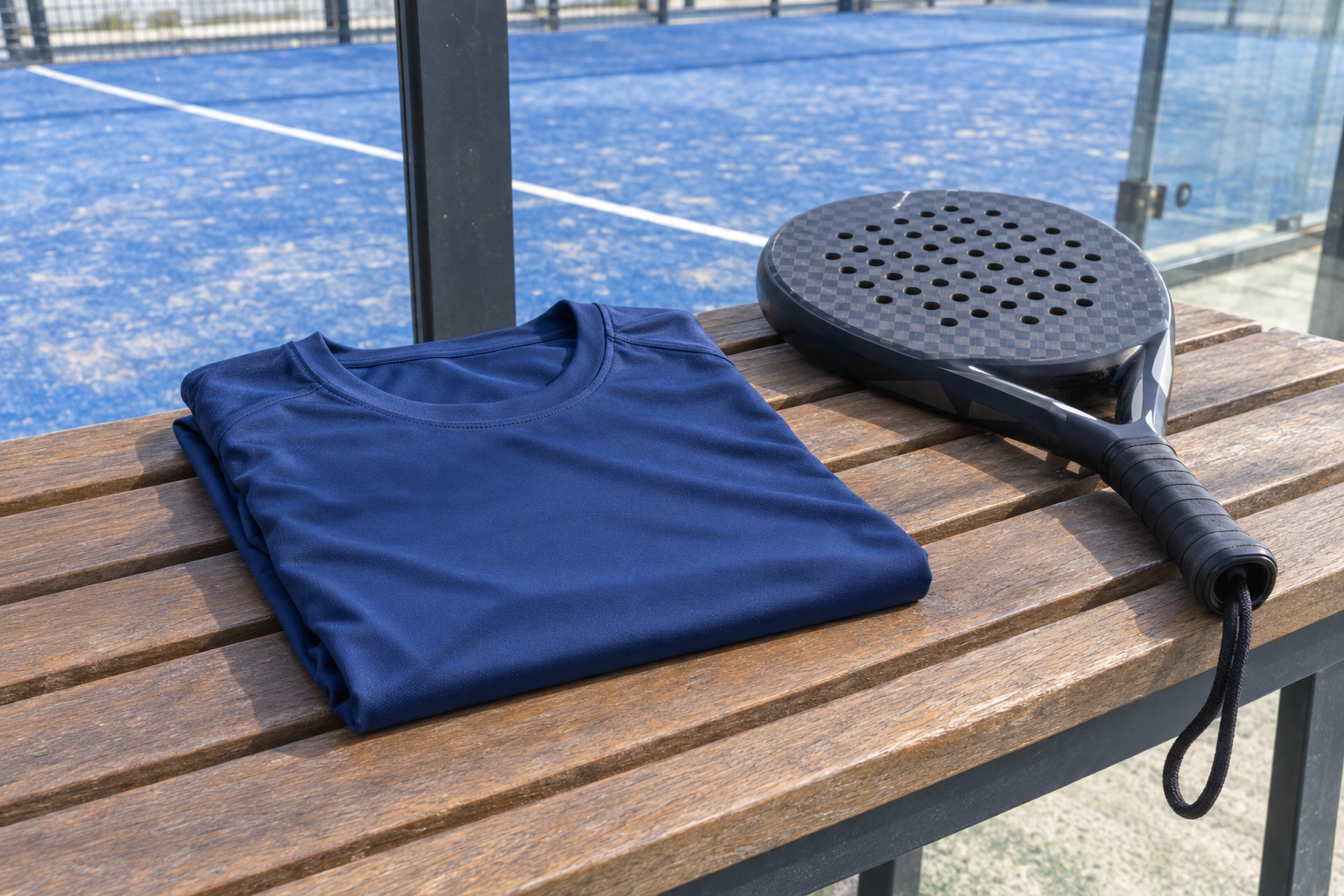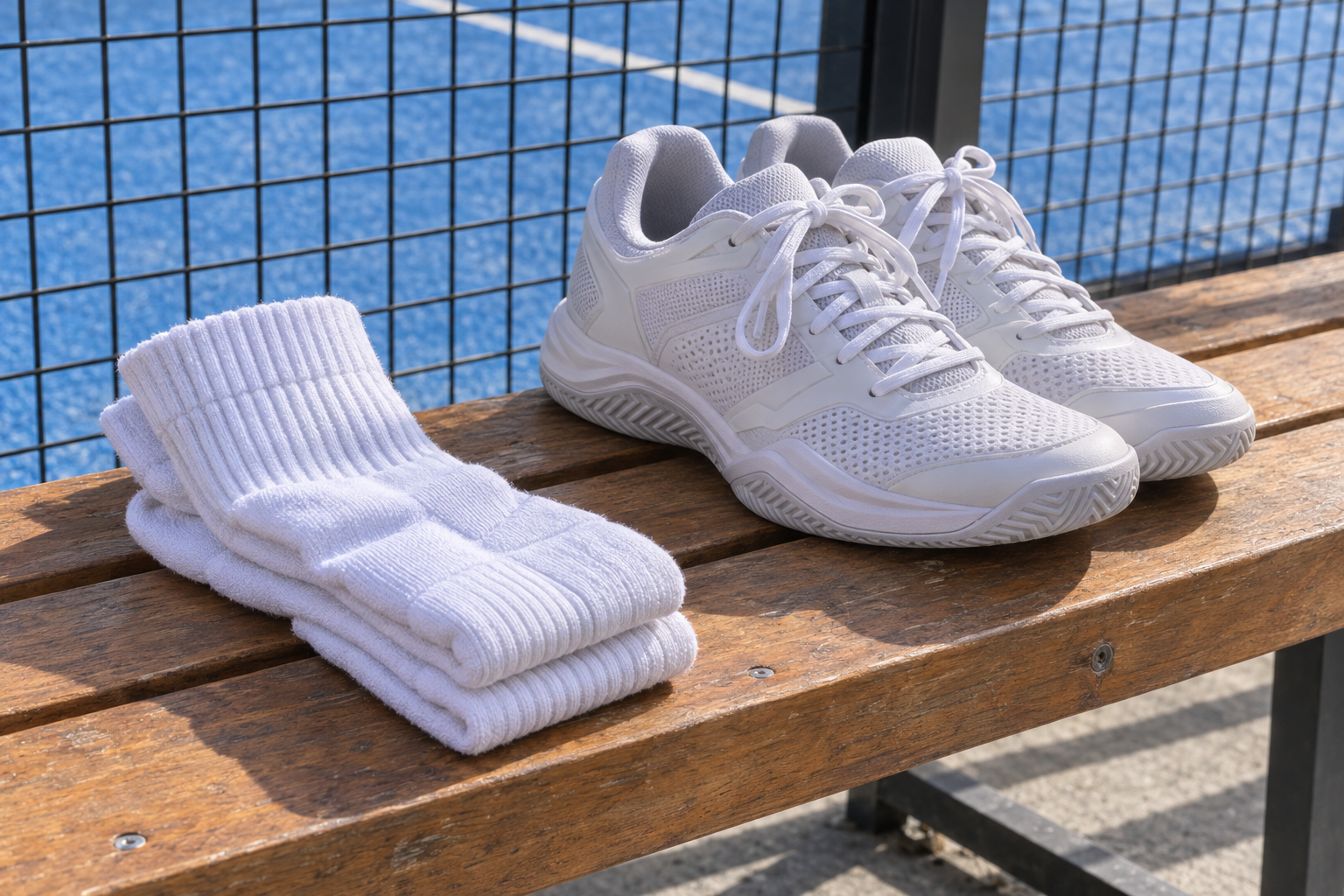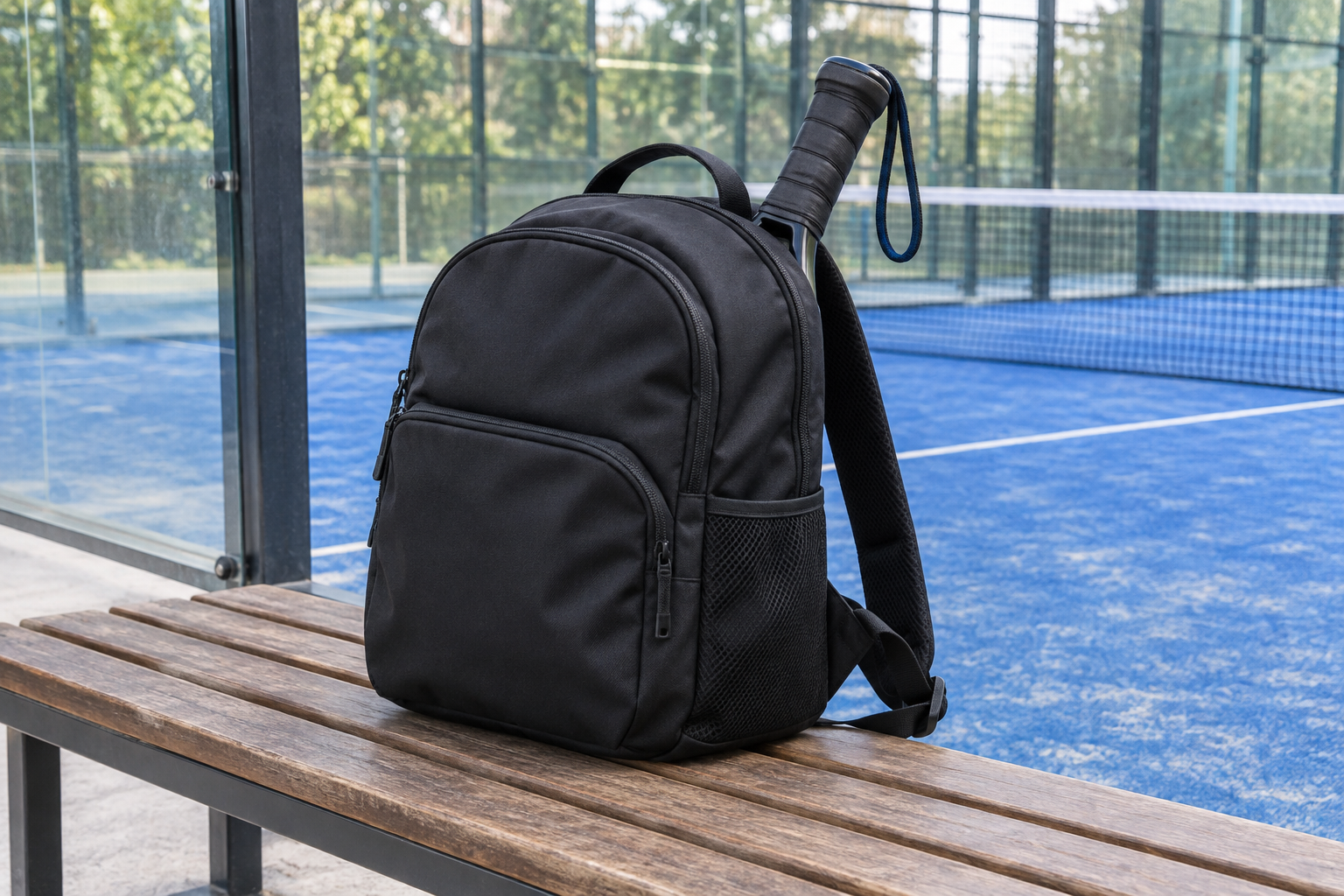
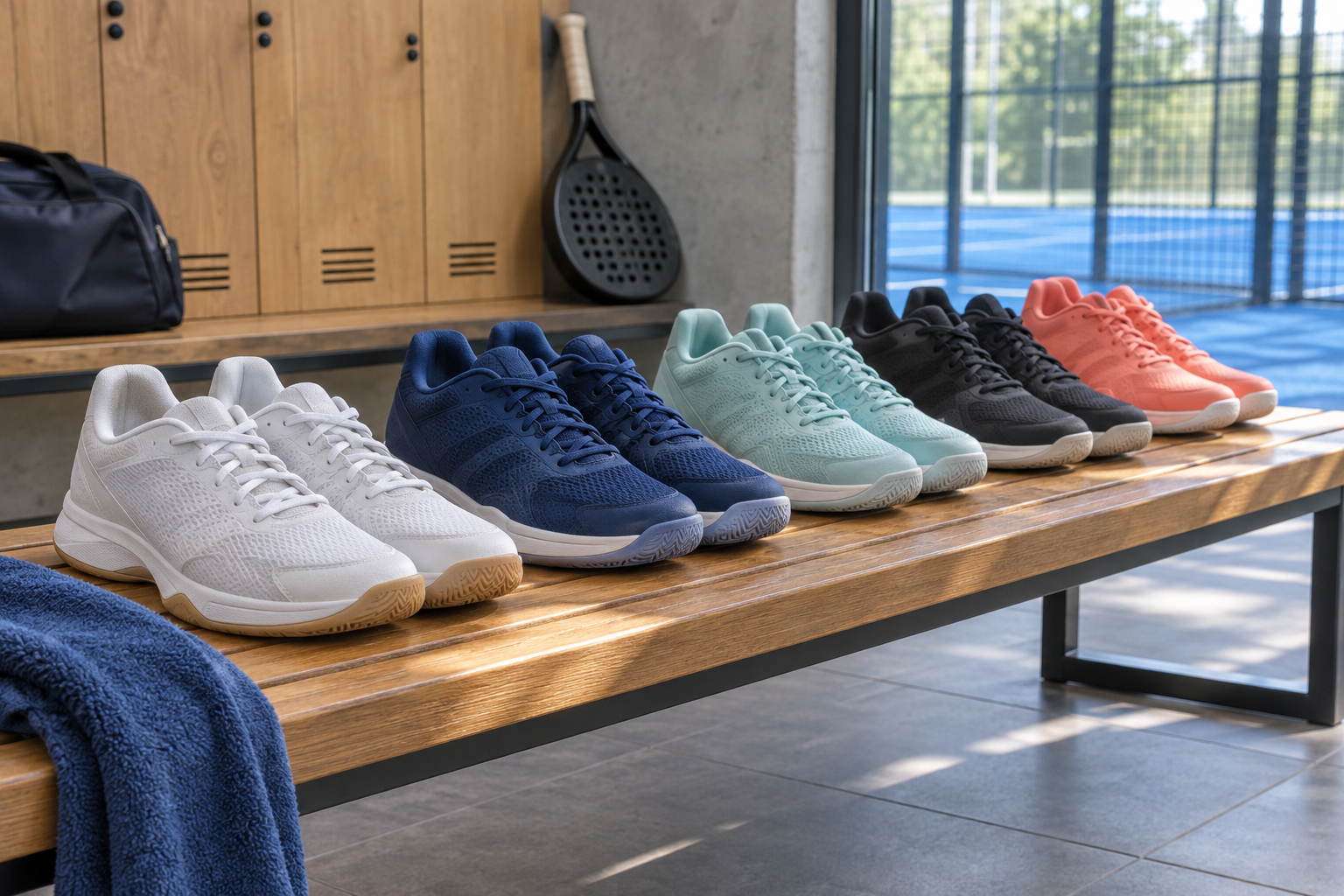
Knowing how to choose padel shoes saves you money and protects your feet, knees and ankles. Padel shoes need to grip sandy turf, support quick lateral movements and stay comfortable for long matches. These six steps help you find the right pair.
In this article
How to choose padel shoes in 6 steps
1. Pick the right sole
Herringbone or clay soles suit most sandy turf courts, while omni soles suit lower-sand or harder surfaces. Read herringbone vs omni soles.
2. Look for lateral support
A firm heel counter and a supportive upper keep your foot stable when you change direction quickly.
3. Choose the right cushioning
Cushioned midsoles absorb impact during sudden stops. Heavier players and those who play often may want more cushioning.
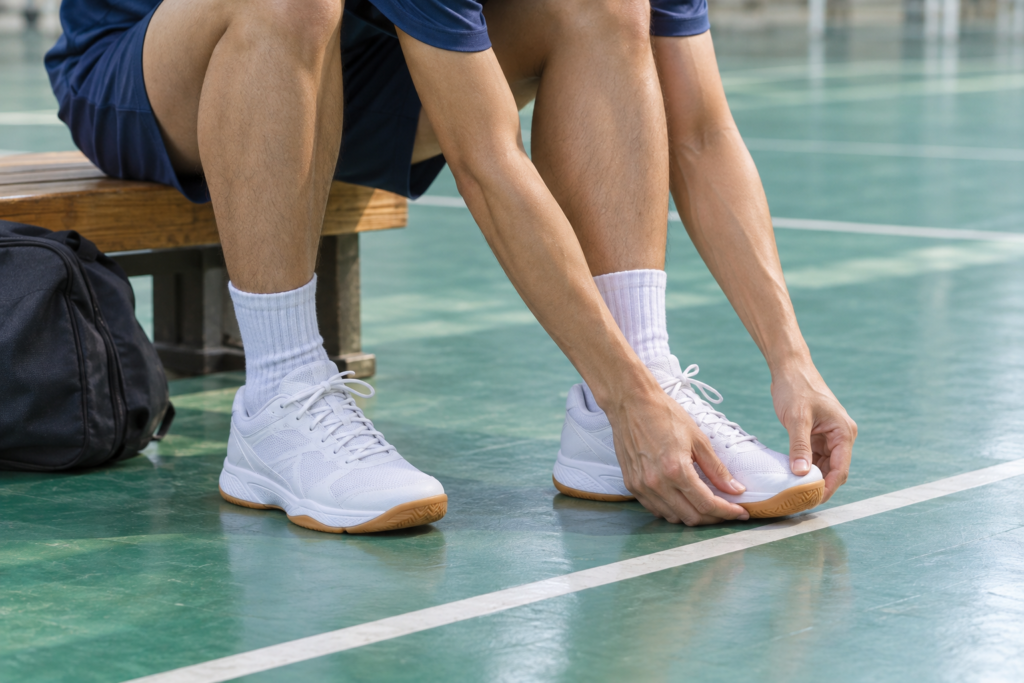
4. Get the fit right
The heel should not lift, the midfoot should feel snug and your toes should have room to wiggle. See how should padel shoes fit?
5. Check durability
Padel is hard on the toe, especially on serves and low volleys. Reinforced toes and durable outsoles last longer.
6. Consider weight
Lighter shoes feel quicker, while slightly heavier shoes often give more support and durability. Choose based on your priorities.
Padel shoes for different players
- Beginners: comfortable, supportive shoes with a herringbone sole.
- Regular players: more durable shoes with good cushioning.
- Wide feet: wide-fit or roomy toe box shoes; see the best padel shoes for wide feet.
- Women: women-specific lasts often fit better; see the best padel shoes for women.
Buying tips
Try shoes on later in the day, when your feet are slightly larger, and wear the socks you play in. Walk and side-step in them before deciding. If you buy online, check the returns policy so you can swap sizes. When you are ready, compare options in our guide to the best padel shoes.
Key takeaways
- Pick the right sole: Herringbone or clay soles suit most sandy turf courts, while omni soles suit lower-sand or harder surfaces.
- Look for lateral support: A firm heel counter and a supportive upper keep your foot stable when you change direction quickly.
- Choose the right cushioning: Cushioned midsoles absorb impact during sudden stops.
- Get the fit right: The heel should not lift, the midfoot should feel snug and your toes should have room to wiggle.
- Check durability: Padel is hard on the toe, especially on serves and low volleys.
- Consider weight: Lighter shoes feel quicker, while slightly heavier shoes often give more support and durability.
Common mistakes when choosing padel shoes
- Buying running shoes, which have soft, high soles that roll on lateral movements.
- Ignoring the outsole pattern for your court surface.
- Choosing a tight fit that leaves no room for socks and swelling feet.
- Keeping shoes long after the tread has worn smooth.
Getting these basics right helps you move confidently and reduces the risk of slipping or rolling an ankle on sandy artificial grass.
New to the sport or looking for a club? LTA Padel, the national governing body for padel in Great Britain, has information on the game, venues and competitions.
How to choose padel shoes for your level
When you learn how to choose padel shoes as a beginner, prioritise grip, comfort and a stable fit. As you improve, you might look for lighter shoes or extra support. Knowing how to choose padel shoes for your court and level helps you move safely and confidently.
If you are still unsure how to choose padel shoes, try on two or three pairs with your usual padel socks and walk sideways in the shop to check how stable they feel.
Frequently asked questions
What should I look for in padel shoes?
A sole that suits your court, lateral support, cushioning, a secure fit and a durable toe.
Are padel shoes worth buying for beginners?
If you play more than occasionally, yes. They improve grip and reduce injury risk.
Should padel shoes be tight?
Snug, not tight. Your heel should be secure and your toes should have room.
The bottom line
Choose padel shoes with the right sole for your court, good lateral support, comfortable cushioning and a secure fit. Spend a little more if you play often.
Keep reading: Best padel shoes · Herringbone vs omni soles