How long padel shoes last depends on how often you play, your court surface, your playing style and your weight. Regular players often wear through the tread within a season, while occasional players may get much longer. The key is to watch for signs of wear rather than counting months.
In this article
What affects how long padel shoes last?
- How often you play: several sessions a week wears soles much faster.
- Court surface: sand-filled turf is abrasive and wears soles over time.
- Playing style: dragging your toe on serves and volleys wears the toe quickly.
- Body weight: heavier players compress cushioning faster.
- Care: drying and storing shoes properly helps them last.
6 signs your padel shoes need replacing
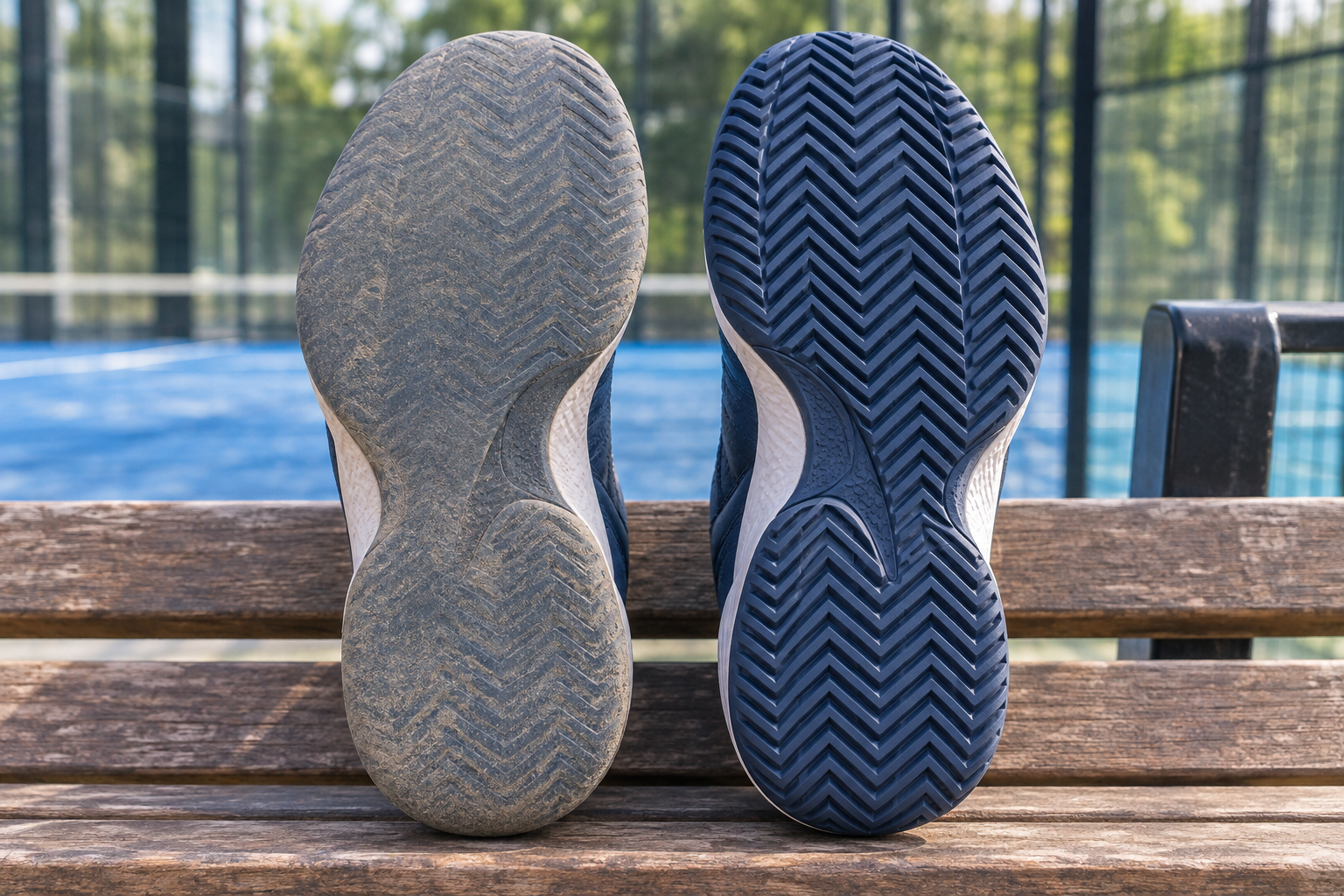
1. Smooth tread
When the sole pattern wears smooth, especially at the ball of the foot, grip drops sharply.
2. You start slipping
If you slide more than usual on quick stops, your soles may be worn out.
3. Flat cushioning
If your feet, knees or back ache more than usual after playing, the midsole cushioning may be compressed.

4. Holes at the toe
Dragging your toe can wear through the upper. Once a hole appears, the shoe will deteriorate quickly.
5. Loss of support
If the heel feels loose or the upper no longer holds your foot securely, it is time to replace them.
6. Uneven wear
Shoes that lean to one side when placed on a flat surface may affect your stability.
How to make padel shoes last longer
- Wear them only for padel, not for walking or the gym.
- Clean off sand after each session; see how to clean padel shoes.
- Let damp shoes dry naturally, away from radiators.
- Rotate two pairs if you play very often.
- Choose shoes with reinforced toes if you drag your foot.
Why worn shoes are risky
Worn soles and flat cushioning increase the chance of slipping, rolling an ankle or overloading your knees. Replacing shoes on time is one of the simplest ways to avoid common padel injuries. When you are ready for a new pair, see the best padel shoes.
Key takeaways
- Smooth tread: When the sole pattern wears smooth, especially at the ball of the foot, grip drops sharply.
- You start slipping: If you slide more than usual on quick stops, your soles may be worn out.
- Flat cushioning: If your feet, knees or back ache more than usual after playing, the midsole cushioning may be compressed.
- Holes at the toe: Dragging your toe can wear through the upper.
- Loss of support: If the heel feels loose or the upper no longer holds your foot securely, it is time to replace them.
- Uneven wear: Shoes that lean to one side when placed on a flat surface may affect your stability.
New to the sport or looking for a club? LTA Padel, the national governing body for padel in Great Britain, has information on the game, venues and competitions.
Frequently asked questions
How often should I replace padel shoes?
When the tread wears smooth or the cushioning feels flat, rather than after a set time.
Do padel shoes wear out faster than tennis shoes?
Sand-filled turf can be abrasive, so padel shoes can wear quickly if you play often.
Can I resole padel shoes?
It is rarely practical. Most players replace them.
The bottom line
How long padel shoes last depends on how much you play and how you care for them. Replace them when the tread is smooth or the cushioning feels flat.
Keep reading: Best padel shoes · How to clean padel shoes